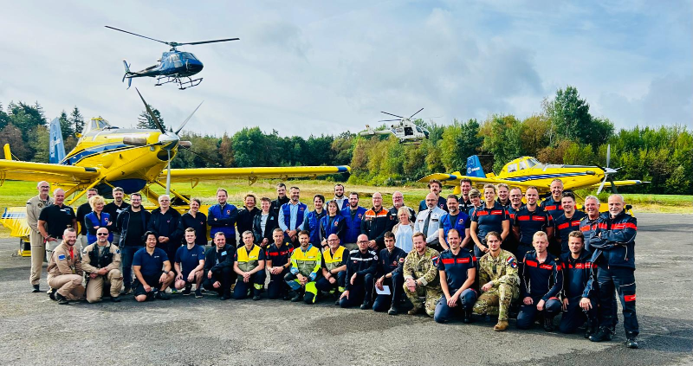
HESTIA - Strengthening Host Nation Support in Belgium
Project Overview
The European project HESTIA – Host Nation Support Emergency Strengthening via Training and Instructions for Assistance aims to strengthen Belgium’s Host Nation Support (HNS) capabilities, namely the procedures and arrangements that enable Belgium to effectively receive and support international assistance in the event of a major disaster or crisis.
Coordinated by the National Crisis Centre (NCCN) in cooperation with the Directorate-General for Civil Protection (DGCP), HESTIA is co-funded by the European Union under the Union Civil Protection Mechanism (UCPM).
The project started in December 2025 and will run until May 2027.
Why HESTIA?
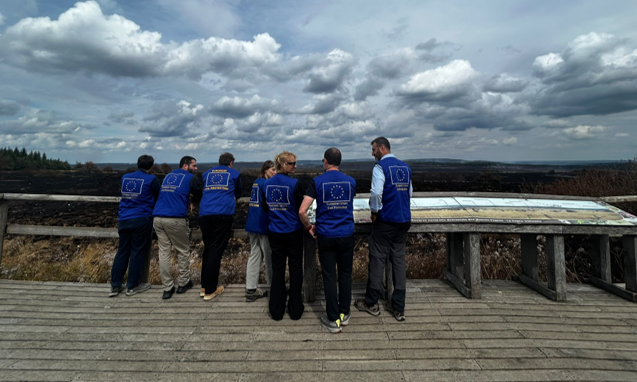
When a disaster exceeds national response capacities, as was the case during the 2021 floods or the High Fens wildfire of summer 2026, Belgium may request international assistance through the European Union Civil Protection Mechanism. However, the arrival of foreign assets such as rescue teams, equipment, experts, or specialized capacities requires rapid coordination among numerous stakeholders.
HESTIA aims to make these mechanisms more efficient and operational by strengthening Belgian procedures while implementing the revised EU Host Nation Support Guidelines 2024.
Project Objectives
HESTIA seeks to:
- Analyse the Host Nation Support procedures and mechanisms currently in place in Belgium;
- Identify gaps and areas for improvement;
- Update national Host Nation Support procedures;
- Strengthen coordination among the authorities and organizations involved;
- Develop tailored training programmes for HNS stakeholders;
- Test the updated procedures during a national exercise in 2027.
The project follows a participatory approach involving federal, regional, provincial and local authorities, operational services, and other relevant stakeholders.
Project News
First National Host Nation Support Workshop
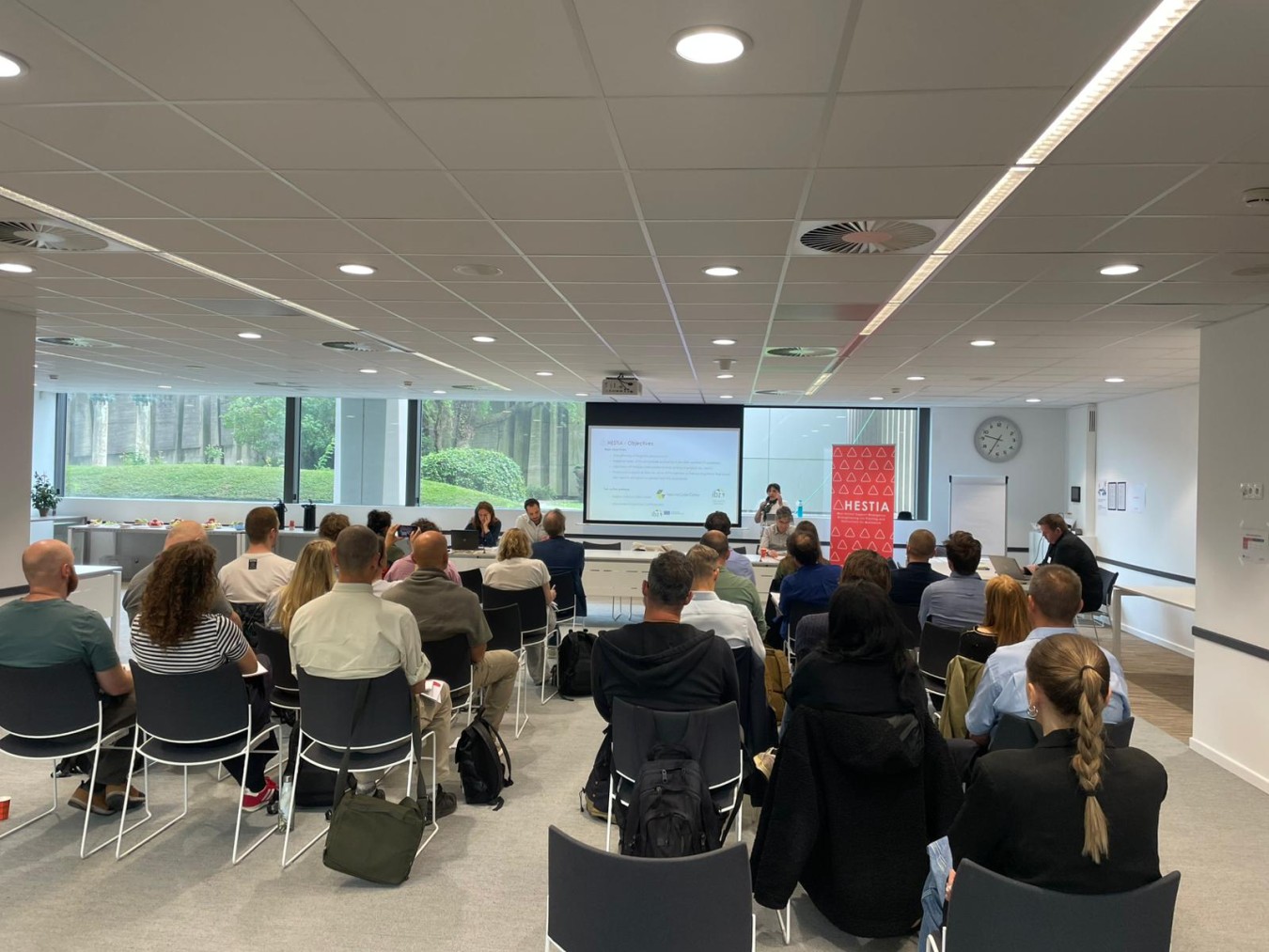
On 17 June 2026, HESTIA organised a first national workshop bringing together around thirty participants representing federal, regional, provincial and local authorities, as well as operational services involved in crisis management.
Using a scenario involving severe flooding affecting several Belgian provinces, participants examined the mechanisms that would be required to receive international assistance.
Discussions focused on topics such as the arrival of foreign teams, coordination with Belgian authorities, logistical arrangements, administrative procedures, and the specific requirements associated with medical and operational capacities.
The lessons learned from the workshop directly contributed to the project's Gap Analysis phase.
First National Host Nation Support Workshop
On 17 June 2026, HESTIA organised a first national workshop bringing together around thirty participants representing federal, regional, provincial and local authorities, as well as operational services involved in crisis management.
Using a scenario involving severe flooding affecting several Belgian provinces, participants examined the mechanisms that would be required to receive international assistance.
Discussions focused on topics such as the arrival of foreign teams, coordination with Belgian authorities, logistical arrangements, administrative procedures, and the specific requirements associated with medical and operational capacities.
The lessons learned from the workshop directly contributed to the project's Gap Analysis phase.
Completion of the Gap Analysis
During the summer of 2026, the HESTIA team completed the Gap Analysis of Belgian Host Nation Support procedures.
Based on a SWOT methodology (Strengths, Weaknesses, Opportunities and Threats), the analysis drew upon:
- A review of existing procedures;
- Lessons learned from previous crises and exercises;
- The outcomes of the June 2026 workshop;
- Exchanges with relevant administrations and services;
- Recommendations contained in the EU Host Nation Support Guidelines 2024.
The Gap Analysis identified areas where existing procedures require clarification, adaptation or further development, as well as areas where entirely new procedures need to be established.
It forms the foundation for the next phase of the project: the revision and updating of Belgian Host Nation Support procedures.
Working Groups to Further Develop Procedures
Since September 2026, HESTIA has been organising several targeted meetings and working groups with the relevant administrations and services.
These discussions address practical issues that may arise when international assistance is deployed to Belgium, including:
- Entry procedures for international teams;
- Customs procedures;
- Importation and use of medical equipment;
- Recognition of professional qualifications for foreign medical personnel;
- Escort arrangements and movements of international teams;
- Drone operations and aviation-related issues;
- Communications and radio frequencies.
The recommendations emerging from these discussions will be incorporated into the updated HNS procedures.
Training Needs Workshop – 15 October 2026
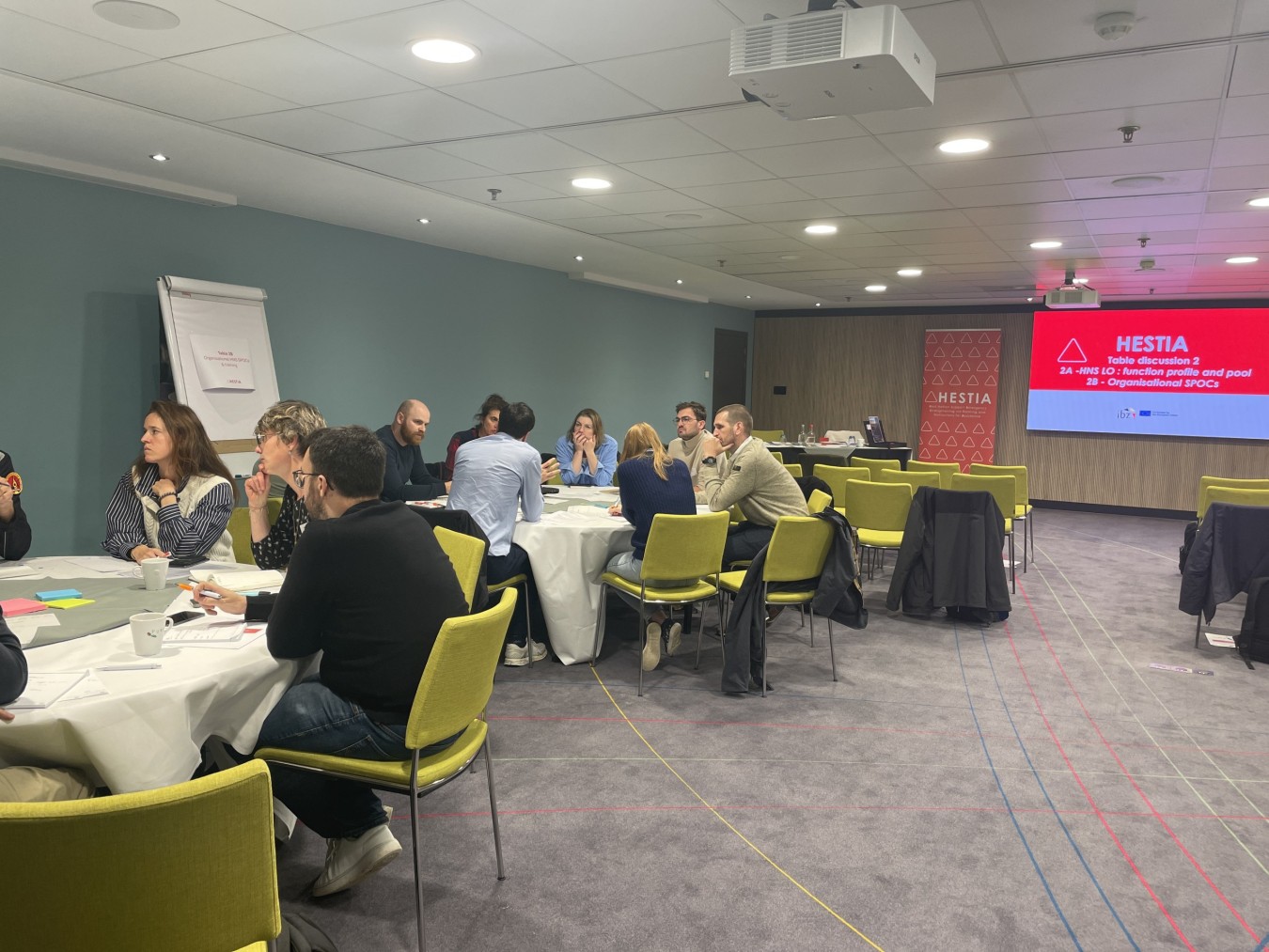
On 15 October 2026, the HESTIA team organized a workshop dedicated to Host Nation Support training needs.
The objective is to identify the knowledge and skills required by the various stakeholders who may be involved in receiving and supporting international assistance.
The outcomes of the workshop will contribute directly to the development of the training courses foreseen under the project.
HESTIA at the EU Civil Protection Forum 2026
HESTIA will participate in the EU Civil Protection Forum, which will take place in Brussels on 3 and 4 November 2026. This flagship event of European civil protection brings together stakeholders of the Union Civil Protection Mechanism (UCPM) to discuss current and future challenges in disaster management across Europe.
On 4 November, HESTIA will take part in a dedicated Host Nation Support workshop alongside four other European projects: CivProLiNC, See HNS, BridGER and OHNSIC.
Together, these five projects will present different approaches to strengthening Host Nation Support at both national and cross-border levels, including the development and revision of procedures, improvements in coordination and interoperability, training activities, practical tools, and exercises.
The session will also provide an opportunity to discuss the implementation of the EU Host Nation Support Guidelines 2024, share good practices developed across Europe, and strengthen synergies between projects.
For HESTIA, participation in the Forum represents an opportunity to share Belgian experience at the European level and contribute to discussions on future cooperation in the field of Host Nation Support.
Next Steps
The coming months will focus on drafting and validating the updated HNS procedures, as well as developing the associated training materials and tools.
In February 2027, training sessions will be organised, particularly for emergency planning practitioners and emergency response services.
From 15 to 17 March 2027, a national exercise will test the procedures developed under HESTIA in an operational scenario.
Finally, a final conference in spring 2027 will present the project's results, the tools developed, and the lessons learned from the exercise.
The overall objective is to ensure that the results of HESTIA continue to strengthen Belgium’s capacity to receive, support and coordinate international assistance during future crises.